The 'Calm Luxury' Minimalism Trap: 9 Design Choices That Look Expensive—but Break Tiny Living
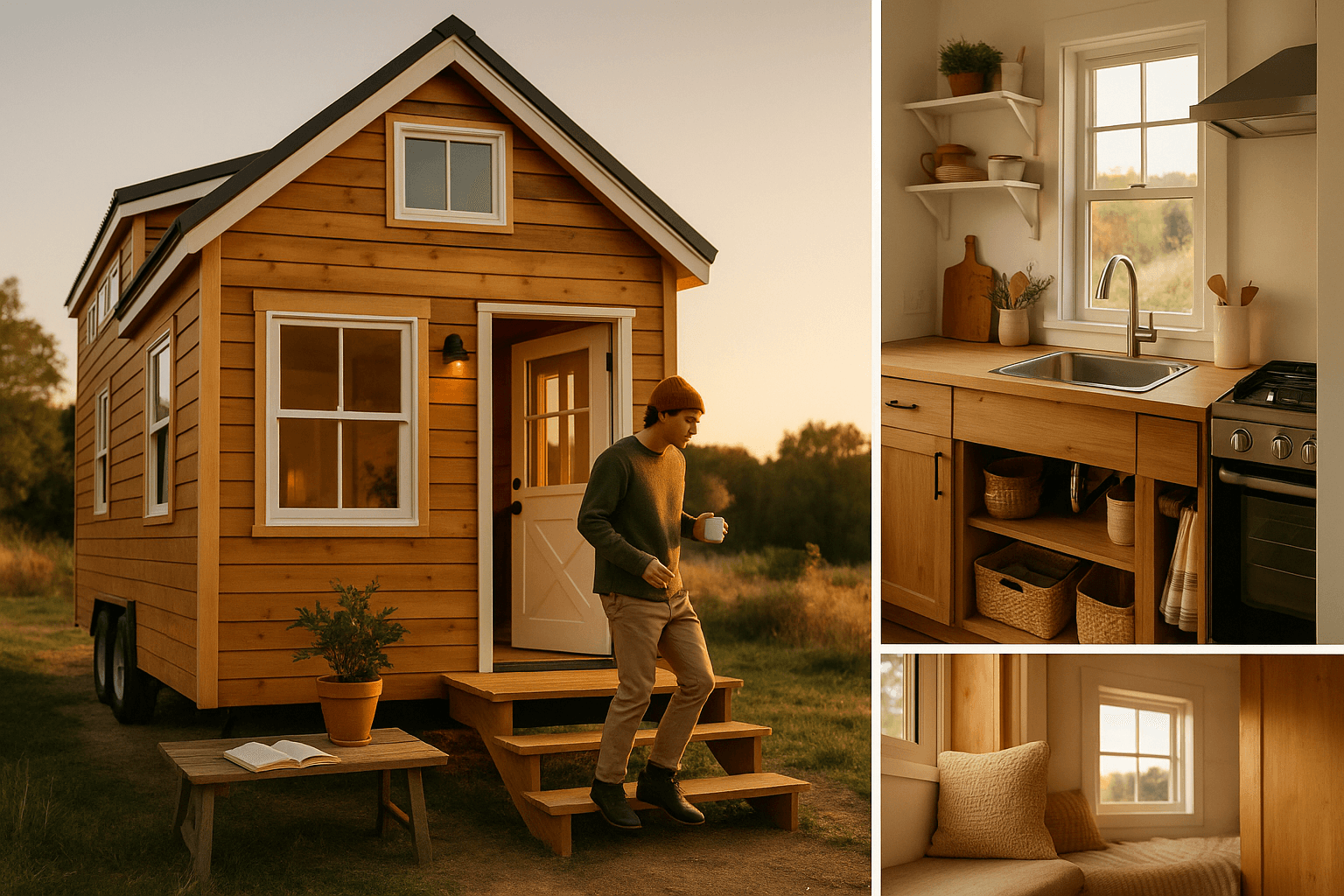
Calm luxury can work in a tiny house—if you treat it like a performance brief (cleaning, storage, humidity, real routines), not a photoshoot. The trap is copying the "seamless, empty, matte, airy" look without the off-camera storage, daily re-styling, and maintenance tolerance it quietly assumes.
Below are 9 calm-luxury design choices we see people fall in love with—and how to stress-test each one for tiny living. For every "tiny-pain," you'll get a tiny-proof swap that keeps the vibe and makes day-to-day life easier.
The set-dressing audit (use this before you copy any Pinterest room)
If you remember one filter, make it this:
- If it needs daily staging, it's set dressing. (A tiny home punishes "put it away later.")
- Cleaning time follows surface complexity, not square footage. (Texture + grout + open shelves = constant micro-cleaning.)
- Storage must match frequency-of-use, not the desire for seamlessness. (Daily items need fast, obvious homes.)
- In small volumes, humidity spikes faster—so glass + tight envelopes demand real ventilation. (Otherwise: fogging, mold risk, degraded finishes.)
1) Seamless, handleless cabinetry everywhere
Why it's tempting
It reads "high-end" instantly: flat planes, no visual noise, a gallery-like calm.
Why it breaks tiny living
In a tiny home, you touch the same doors constantly.
- Fingerprints + grease become the new "pattern." Especially near the cooktop and trash.
- Push-latches drift and misbehave over time (alignment matters more when everything is used more).
- One-handed access gets annoying when you're holding a pot, a kid, or a laundry basket.
- Tight clearances can make handleless edges harder to grab when you're rushed.
Tiny-proof swap (keeps the luxe)
- Use slim, low-profile pulls (tonal metal or wood) on high-use doors.
- Reserve true handleless for low-touch zones (upper cabinets, wardrobe).
- Add one "service wall" where function wins: broom closet, trash pull-out, utilities.
2) Open shelving (and the styled pantry fantasy)
Why it's tempting
Open shelves look airy, modern, and "effortless."
Why it breaks tiny living
Open shelves turn your real life into permanent decor.
- Dust + cooking grease film builds fast in small kitchens.
- Everything is visually loud: packaging, mismatched mugs, half-used staples.
- You're forced into constant curation—which is basically unpaid labor.
Tiny-proof swap (keeps the airy look)
- Do one hero shelf max (for 6–10 beautiful items you actually use).
- Go closed uppers to the ceiling to remove visual clutter and add storage.
- If you want "depth," use reeded/fluted glass fronts for low-use items (still calmer than open).
3) No drop-zone entry (the magazine doorway)
Why it's tempting
A blank entry feels serene—no hooks, no shoes, no 'stuff.'
Why it breaks tiny living
In a tiny home, one surface becomes the whole home's clutter center. Without an entry buffer:
- Wet coats land on chairs.
- Shoes migrate under the table.
- Dog gear becomes "decor."
- Dirt spreads because there's no containment.
Tiny-proof swap: the micro-mudroom
Even 18–24 inches of planned entry solves it.
Include:
- Bench (sit to remove shoes)
- Closed shoe drawer or flip-down bin
- Hooks at two heights (adult + kid)
- Washable wall panel (wood slats, durable paint, or wipeable board)
4) Monolithic microcement/plaster in high-wear zones
Why it's tempting
Continuous floors and walls look expensive: spa-like, seamless, architectural.
Why it breaks tiny living
These finishes can be maintenance-sensitive depending on sealer, wear, and water exposure.
- Splash zones (sink/shower) can stain or dull if the sealer isn't right.
- Micro-cracking can happen with movement (tiny homes move—especially on wheels).
- Patches can be visible, which ruins the "monolith" illusion.
Tiny-proof swap (still feels architectural)
- Use microcement/plaster as a feature zone (one wall, not the whole envelope).
- In wet areas, choose large-format waterproof panels or tile with minimal grout lines.
- If you insist on microcement in a wet zone, specify high-performance sealer and accept periodic refresh.
5) Limewash / ultra-matte walls everywhere
Why it's tempting
That chalky, cloudy softness is the calm-luxury signature.
Why it breaks tiny living
In tiny spaces, you brush walls more often—bed edges, banquettes, tight hallways.
- Ultra-matte surfaces show scuffs and touch marks near switches, seating, and beds.
- Spot-cleaning can leave "burnished" patches (shiny spots) depending on product.
Tiny-proof swap (same softness, less regret)
- Use limewash effect above wainscot height.
- Put scrubbable matte in touch zones (entry, kitchen, dining banquette).
- Add corner protection subtly (rounded trim, wood slats, or a built-in ledge).
6) Giant glazing + "no curtains" minimalism
Why it's tempting
Big glass is instant luxury: nature as art, bright interiors, modern lines.
Why it breaks tiny living (building-science reality)
In a small volume, humidity from cooking and showers spikes quickly—and glass is a cold surface in winter.
- Condensation + fogging becomes normal.
- Persistent moisture raises mold risk, especially around frames.
- Big glazing can mean overheating in sun and heat loss at night.
- "No curtains" creates privacy stress, which makes tiny living feel exposed.
Tiny-proof swap (still bright, more stable)
- Right-size glazing: one hero window + supporting smaller openings.
- Choose high-performance glass appropriate for your climate.
- Pair with a real ventilation plan (strong bath fan, kitchen exhaust; HRV/ERV is increasingly worth it in tight homes).
- Use soft, minimal window treatments (sheer + insulated shade) so it still reads calm.
7) "Minimal counters" + hidden appliances (but you cook daily)
Why it's tempting
Empty countertops photograph like a boutique hotel.
Why it breaks tiny living
If you cook daily, hiding everything creates a loop:
- Pull out appliance → use → clean → put away → repeat.
- When you're tired, you don't reset.
- Then the counter becomes the one surface clutter center.
Tiny-proof swap: designate a real working runway
- Create one always-clear prep zone (even if it's only 24–36 inches).
- Add an appliance garage (door or pocket door) for toaster/coffee.
- Include a trash + compost pull-out near prep (tiny kitchens need tight workflow).
Also watch the "one-butt kitchen" reality: if two people can't pass, the layout must reduce cross-traffic.
8) Light, low-profile upholstery and linens (hotel palette)
Why it's tempting
Creams, oatmeal, and white look serene and expensive.
Why it breaks tiny living
Tiny living increases contact:
- You sit, lounge, eat, work—all on the same surfaces.
- Kids/pets + outdoor life = more grit, more pawprints.
- Laundry can be smaller or less convenient, so "wash constantly" isn't always realistic.
Tiny-proof swap (still calm)
- Choose performance fabrics (stain-resistant, tight weave) in mid-tones.
- Add texture (bouclé lookalikes, heathered weaves) that hides life without looking busy.
- Use slipcovers where possible (quiet luxury is ease).
9) Invisible storage that's hard to access (secret-compartment syndrome)
Why it's tempting
Hidden storage feels like the ultimate minimalist flex.
Why it breaks tiny living
If storage takes effort, you stop using it.
- Awkward lift-ups and deep voids become junk caves.
- You create "temporary piles" because putting things away is friction.
- Accessibility matters more than total storage volume.
Tiny-proof swap: storage by frequency (70/20/10)
A simple rule that works in real tiny houses:
- 70% daily: fastest access (eye-level cabinets, open-but-contained bins, hooks)
- 20% weekly: slightly deeper/higher (overhead, under-bench drawers)
- 10% seasonal: hardest access (high loft bins, under-floor, exterior box)
The 9 traps at a glance (tiny-pain vs tiny-proof)
| Calm-luxury choice | What fails in tiny living | Tiny-proof version that keeps the vibe |
|---|---|---|
| Handleless cabinets everywhere | Grease + latch issues + awkward access | Slim pulls on high-touch doors; handleless only where it's low-use |
| Open kitchen shelving | Dust/grease + constant visual clutter | One hero shelf; closed uppers to ceiling; optional textured glass fronts |
| No drop-zone entry | Mess migrates instantly | Micro-mudroom: bench + closed shoe storage + hooks + washable wall |
| Microcement/plaster everywhere | Staining, micro-cracks, visible patching | Feature-zone only; waterproof panels/tile in wet areas |
| Ultra-matte/limewash everywhere | Scuffs + hard spot-cleaning | Limewash high; scrubbable matte in touch zones; protect corners |
| Giant glazing, no curtains | Condensation + privacy/heat issues | Right-sized glazing; high-perf glass; ventilation + soft treatments |
| Empty counters, hidden appliances | Unpacking loop → clutter rebound | Dedicated prep runway; appliance garage; optimized workflow |
| Light, delicate textiles | Stains + constant laundering | Performance fabrics; mid-tones; textured weaves; slipcovers |
| Hard-to-access hidden storage | Friction → piles + "junk caves" | Storage by frequency (70/20/10) with fast daily access |
Tiny-proof calm luxury checklist
- Horizontal surfaces must earn their keep. If it's empty in photos, where does life go?
- Closed storage beats constant styling. Open shelves are a commitment.
- Plan an entry buffer. Dirt and gear need containment.
- Assume humidity spikes. Big glass requires ventilation strategy.
- Choose finishes that forgive contact. Tiny living = more touch per square foot.
- Access speed beats hidden perfection. If putting it away is hard, it won't happen.
FAQ: Calm luxury minimalism in a tiny house (without the fantasy)
Is open shelving ever practical in a tiny kitchen?
Yes—as a controlled accent, not your main storage. One shelf for a few daily items can feel airy. But for most people, closed uppers to the ceiling are what keeps the home visually calm.
Do handleless cabinets work long-term?
They can, but the tiny-house version needs realism: use handleless where it's low-touch, and use slim pulls where grease and constant access would turn "minimal" into "annoying."
How do I prevent condensation/mold with big windows?
Treat glazing as a system: right-sized windows, climate-appropriate glass, and real mechanical ventilation (strong bath fan, kitchen exhaust; HRV/ERV becomes more valuable as the envelope gets tighter/smaller). Tiny air volume means humidity spikes faster.
Are limewash and plaster finishes actually cleanable?
They're beautiful, but they're not equally forgiving everywhere. Use the look strategically and put scrubbable matte in high-touch zones (entry, kitchen, seating). In tiny homes, walls get more contact.
What finishes hide wear best with kids and pets?
Mid-tone neutrals with texture, performance fabrics, and durable floors that don't show every scratch. The calm-luxury trick is to choose materials that age quietly.
What's the tiny-house version of a mudroom?
A micro-mudroom: a bench, closed shoe storage, hooks, and a washable wall panel. It's the difference between "calm" and "constant chaos."
Which 'luxury' choices are worth it vs just Instagram?
Worth it usually means ease: good ventilation, durable finishes, smart storage, and a kitchen layout that works. Instagram luxury often relies on invisible labor—daily decanting, constant tidying, and off-camera storage you don't have.