The Daily Systems That Keep Luxury Tiny Homes Actually Livable
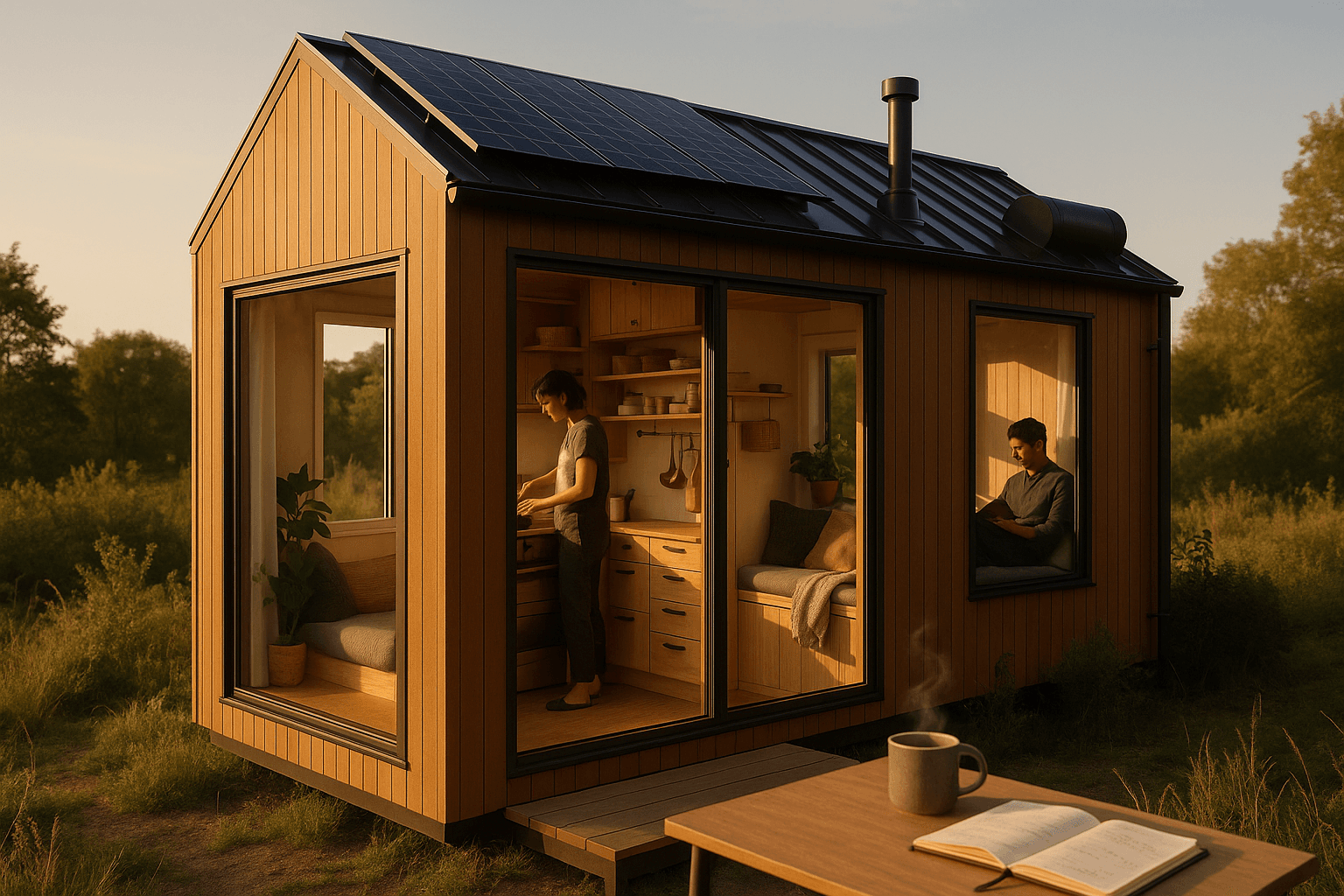
Those Instagram-perfect tiny home tours? They're missing the real story. The difference between a tiny home that feels like a luxury retreat and one that feels like a beautiful prison isn't the marble countertops or Edison bulbs—it's the invisible systems running behind the scenes.
In 200-400 square feet, you can't wing it. Every habit, every storage decision, every daily routine either works for you or slowly turns your dream home into an expensive storage unit with a view.
Here's what actually keeps luxury tiny living calm, day after day.
Why "Luxury Tiny" Is Really About Operations
A tiny home can look like a boutique hotel and still feel chaotic if the systems aren't there. The physics are working against you:
Space compression: In a typical THOW (200-400 sq ft) or small ADU (400-800 sq ft), every object competes for your attention, your steps, your countertops. There's no "later" pile—everything is always in view.
Moisture concentration: Small air volume means showers, cooking, and even breathing raise humidity fast. Skip the ventilation plan, and you're fighting condensation and that musty feeling.
No buffer zones: Regular homes have spare bedrooms to hide the mess. In tiny living, those laundry baskets and Amazon boxes land on the dining table you need tonight.
When you design with TinyHouses' AI platform, we encourage you to think like an operator first: design around daily flows, morning bottlenecks, where wet towels actually dry, where coats land when you're rushing.
System #1: The 10-Minute Reset (Your Secret to Luxury)
The calmest tiny homes treat every evening like a hotel room turnover. Ten minutes. That's it.
Kitchen (3 minutes)
- Sink empty or dishwasher loaded
- Counters clear—one intentional item max
- Stovetop wiped
- Dish towel hung properly
Living area (3 minutes)
- Fold or convert furniture if needed
- Tech away: laptop closed, charger returned
- One "sweep basket" for strays (empty it tomorrow morning)
Entry zone (2 minutes)
- Shoes aligned or binned
- Keys in their spot
- Bags hung—nothing on the floor
Bath (2 minutes)
- Quick shower squeegee
- Fan on timer
The Landing Zone Rule
Calm tiny homes have exactly one designated spot for keys, mail, sunglasses, dog leash, today's papers. That zone can be messy—but only within its boundaries. The rest stays visually quiet.
In TinyHouses' AI designer, prompt: "Add an entry landing zone with hooks, slim bench, and concealed shoe storage for two adults plus one dog." Generate variations until the flow feels effortless.
System #2: Storage That Actually Works
Luxury in tiny living isn't more cabinets—it's retrieval speed. If you can't put something away in under 60 seconds, it will drift onto surfaces.
Zone your storage around real life:
Entry: Hooks for each person plus one guest hook. Shoe bin sized to your actual maximum, not your aspirational minimum. Micro-utility drawer for flashlight, lint roller, dog bags.
Kitchen: Daily-reach shelf with your 10-12 constant-use items. Pantry in labeled bins: breakfast, snacks, cooking basics. One clear counter rule.
Bathroom: Duplicate essentials so items don't migrate between rooms. One towel per person plus one spare.
Sleep zone: Bedside pocket for book, glasses, water. Small clothes capsule nearby; off-season items rotate out.
Utility zone: The missing piece in most designs. Hidden but accessible spot for spare filters, fuses, hose washers, batteries, tape.
Three Non-Negotiable Storage Rules
- Containerize by category: Bins beat stacks. Stacks collapse.
- One-in, one-out: Especially for clothes and mugs
- Nothing lives on floors: Floors are for walking
When browsing TinyHouses rentals or listings, filter through a systems lens: Is there a real entry zone? A utility cabinet? Where do bulky items actually go?
System #3: Laundry Flow (The Make-or-Break System)
Tiny homes don't have laundry rooms. They have laundry pipelines: Dirty → stage → wash → dry → fold → put away immediately.
If "fold" becomes a pile, your calm evaporates.
Three setups that actually work:
- Compact washer + ventless dryer: Simplest routine, higher cost
- Washer + drying rack: Cheapest, but demands humidity management
- No machines + laundromat batching: Surprisingly calm if scheduled
Drying Without Creating a Swamp
Tiny air volume saturates quickly. Pair indoor drying with ventilation:
- Rack near vented window or under mini-split airflow
- Bathroom fan timed after showers
- Monitor humidity—shift to laundromat if indoor RH climbs
In our AI designer, ask for "a laundry niche with compact washer, fold-down drying rack, and hidden but ventilated hamper." Small change, huge impact.
System #4: Micro-Cleaning Beats Marathon Cleaning
Luxury tiny homes look effortless because cleaning is distributed, not delayed.
The rhythm:
- Daily: 5-10 minutes (the reset)
- Weekly: 30-60 minutes total, split by zone
- Monthly: Systems checks plus one deeper item
Weekly zone plan:
- Monday: Bath (mirror, toilet, quick floor)
- Tuesday: Floors (vacuum high-traffic only)
- Wednesday: Kitchen (fridge sweep, sink drain)
- Thursday: Laundry catch-up plus bedding
- Friday: Paper admin (mail, receipts, calendar)
- Saturday: Optional deep clean
- Sunday: Home ops hour
The Kitchen Rule Tours Never Mention
Never sleep with dishes in the sink. In tiny living, the sink is your prep space, visual field, and often your only counter extension.
When shopping on TinyHouses, compare sink size, dish storage, counter length—whether a home supports daily cooking, not just weekend vibes.
System #5: Climate Control (The Invisible Luxury)
This determines whether your tiny home feels dreamy or clammy.
Comfort targets:
- Indoor relative humidity: 30-50% RH
- Above 60% RH: mold risk and that damp feeling rise
Moisture sources to manage:
- Shower steam
- Cooking steam
- Wet towels and jackets
- Indoor clothes drying
- Breathing (especially overnight in lofts)
Ventilation Habits That Keep Air Hotel-Clean
Bathroom fan: Run during shower plus 20-30 minutes after (timer switches ideal)
Range hood: Must vent outdoors, not recirculate. Use every time you cook.
Quick air exchanges: Window crack after shower/cooking, especially in shoulder seasons
Weekly Condensation Patrol
Check these spots in cold or humid climates:
- Window corners and frames
- Behind furniture
- Loft ceiling corners
- Under mattresses (lofts need airflow underneath)
Why mini-splits show up in luxury tiny homes:
- Heat and cool efficiently
- Dehumidify while cooling
- Maintain stability without bulky ducting
Design with TinyHouses AI around your climate: "Create ventilation-first tiny home for Pacific Northwest with vented range hood, strong bath fan, mini-split, and dedicated dehumidifier cabinet."
System #6: Maintenance That Prevents Problems
Tiny homes stay calm when small issues are caught early.
Weekly 15-minute systems check:
- Look under sinks for drips
- Check tank levels (if applicable)
- Empty dehumidifier bucket
- Quick seal check around doors/windows
- Check propane level
- Clear shower drain of hair/debris
Monthly/seasonal checklist:
- Clean/replace HVAC filters
- Test smoke/CO alarms
- Visual roof inspection
- Before winter: freeze protection plan
- Before summer: bug screens, shade strategy
The Tiny House Spare Kit
Keep a labeled bin with:
- Plumber's tape
- Spare fuses
- Hose washers and fittings
- Basic screwdriver set
- Headlamp
- Spare alarm batteries
- Spare water filter
With TinyHouses, rent before you buy to learn your personal "oops list" safely—then design your next build around it.
Two Weekly Templates You Can Copy
Designed to prevent surface creep and humidity creep.
Template A: Solo Work-From-Home
Daily:
- Morning (8 min): Make bed, open window 2 minutes, clear landing zone
- Midday (5 min): Dish sweep, trash check
- Evening (10 min): Full reset close
Weekly:
- Monday: Bathroom zone (15 min)
- Wednesday: Laundry batch (same-day completion)
- Friday: Admin plus maintenance (30 min)
- Sunday: Meal plan, pantry reset (20 min)
WFH rule: Your laptop needs a home that isn't the dining table.
Template B: Family (2 Adults + Kids)
Daily anchors:
- AM stagger (10 min total): One handles breakfast, one does beds/landing zone
- After school (7 min): Drop zone reset
- After dinner (12 min): Kitchen close plus tomorrow prep
Weekly:
- Tuesday + Saturday: Laundry batching
- Thursday: Bedding and towels
- Sunday (45-60 min): Family home ops hour
Family rule: No backpacks on floors—ever.
The Systems-First Evaluation Checklist
When evaluating any tiny home, don't ask "Is it pretty?" Ask "Will it run smoothly on a Tuesday?"
Reset system: Real landing zone? Morning routine flow for two people?
Storage system: Where do coats, shoes, vacuum, seasonal gear actually live?
Laundry system: Washer/dryer solution or realistic laundromat plan?
Air system: Bath fan strong enough? Range hood vented outdoors? Cross-ventilation possible?
Temperature system: Mini-split or efficient heating/cooling? Summer shade strategy?
Maintenance system: Easy utility access? Space for spare-kit bin?
This is exactly why TinyHouses covers the whole journey—design with AI, rent to test real systems, then buy from our worldwide marketplace once your operations are proven.
What Really Breaks First
Not dramatic failures—small issues compound. Clogged drains, loose fittings, worn seals, filter neglect. Weekly 15-minute checks prevent "why is the floor wet?" surprises.
Can you cook daily in a tiny home? Absolutely—if you protect counter space, keep the sink clear, use a vented hood. Generate kitchen layouts in TinyHouses AI specifically for "daily cooking with minimal cleanup."
Couples and quiet time? Define micro-zones and rules: headphones for calls, quiet hour, place where work disappears after hours. Good design makes those rules easier to follow.
Design your tiny home around these daily systems before you build or buy. TinyHouses' AI design generator helps you plan reset rituals, laundry flow, and climate comfort into your layout. Explore your first 3 concepts free, then match designs to real rentals or purchase options worldwide: tinyhouses.to/design