11 'Ugly Sustainability' Habits That Keep Your Tiny Home Fresh (Not Funky)
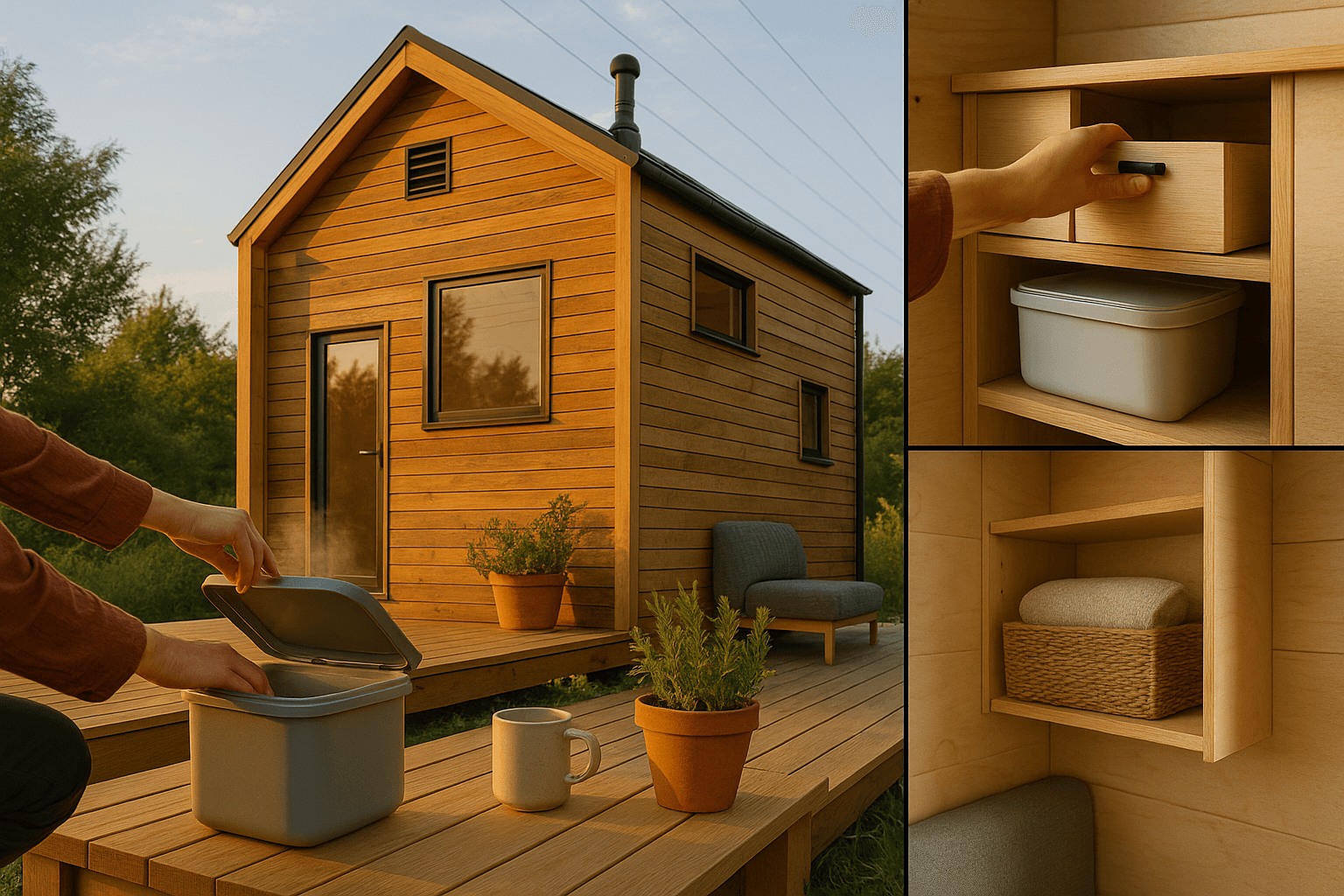
Living eco-friendly in 200–400 square feet doesn't mean embracing that "survival shack" aesthetic. The smartest tiny house owners know this secret: the most "unsexy" sustainability habits are actually comfort engineering.
In a tiny home, bad habits don't just spread—they multiply. Moisture spikes fast. Odors have nowhere to hide. One leaky fitting becomes constant visual noise.
But here's the thing: when you design these systems right from the start, "ugly sustainability" becomes invisible sustainability. Your home stays modern, minimal, and genuinely pleasant to live in.
Why tiny spaces amplify everything (the physics you need to know)
In a normal house, moisture and odors disperse. In a tiny house, they concentrate:
- Humidity jumps quickly: Most comfort guidelines target 30–50% relative humidity. One shower can push a small space past 60%—hello, mold risk.
- Odors compound: Trash, drains, damp laundry, and compost mistakes make the whole home smell within hours.
- Visual clutter creates mental friction: Every half-fixed problem becomes constant background noise.
When you're designing your tiny home with our AI generator, these aren't afterthoughts—they're foundational systems that determine whether your space feels designed or desperate.
The 11 habits that actually pay off
Each habit targets the same three outcomes: comfort, cost savings, and cleanliness. Because in tiny living, those three things are everything.
1. Run your bathroom fan like you mean it
The tiny house reality: A hot shower can fog every window in minutes. That moisture clings to textiles, settles in corners, and creates that permanent "damp" smell.
Do this: Run the bath fan during your shower and 20–30 minutes after. Use a timer switch so you don't rely on memory.
The payoff: Less clammy air, fewer window drips, towels that actually dry clean.
2. Cook with lids and ventilation (every single time)
The tiny house reality: Cooking aerosols coat every surface. Without proper ventilation, your whole home smells "like last night" for days.
Do this: Use lids on boiling pots. Run your range hood while cooking. Wipe splatter immediately—30 seconds prevents 30 minutes of scrubbing later.
The payoff: No sticky film on cabinets. No need for constant air fresheners. Your space stays neutral.
3. Treat laundry drying as a humidity event
The tiny house reality: Indoor drying without ventilation is a hidden humidity bomb that leaves clothes musty and windows dripping.
Do this: Dry outside when possible. If drying inside, use high spin cycles and run ventilation until everything's completely dry. Never leave damp loads sitting.
The payoff: Stable humidity, fresh-smelling clothes, fewer moisture problems.
4. Master the "2-bin organics" system
The tiny house reality: Food scraps are the fastest route to fruit flies and sour odors in small spaces.
Do this: Keep a small sealed countertop caddy for daily scraps. Transfer to a sealed main bin—or go "ugly genius" and freeze scraps until compost day.
The payoff: Zero mystery smells, no pest problems, bins stay clean instead of gooey.
5. Rinse recyclables immediately
The tiny house reality: Sticky cans and jars attract ants and create that sweet-sour smell that makes recycling areas feel gross.
Do this: Quick rinse, shake dry, keep recycling lidded.
The payoff: No kitchen corner shame, fewer pest problems, your home stops smelling like old juice.
6. Monthly drain reset (biofilm is the real enemy)
The tiny house reality: Sink and shower odors spread instantly, especially in compact plumbing systems.
Do this: Monthly hot water flush, clean sink stoppers and hair catchers, keep traps wet during travel.
The payoff: No random "sewer-ish" days, prevents bigger clogs, removes odor sources instead of masking them.
7. Textile discipline: washable everything
The tiny house reality: Fabrics hold moisture and odors, then release them when the house warms up.
Do this: Choose washable covers for cushions and throws. Hang towels spread out, not folded. Replace "forever damp" bath mats.
The payoff: Neutral-smelling home, longer-lasting fabrics, fewer mystery odors.
8. Hide your refill station (and limit bottles)
The tiny house reality: "Eco refills" become clutter faster than they reduce waste.
Do this: Designate one cabinet as refill central. One bottle per product. Use concentrates and label clearly.
The payoff: Clean counters, cost savings from concentrates, less sticky residue everywhere.
9. The "one-touch trash exit" rule
The tiny house reality: "Just for tonight" trash becomes tomorrow's odor problem.
Do this: If the bag is tied, it leaves immediately. Keep a smaller bin so it fills faster—sounds annoying, but it's cleaner.
The payoff: No lingering odors, dramatic pest reduction, fewer cleaning products needed.
10. Weekly leak patrol
The tiny house reality: A "minor" leak is a huge percentage of your water supply, and moisture damage spreads fast in small spaces.
Do this: 60-second weekly check under sinks, around toilets, behind shower access. Know where your main shutoff is.
The payoff: Fewer emergencies, prevents water damage, stops damp-cabinet smells.
11. Keep a repair-first micro-kit
The tiny house reality: One broken latch becomes clutter, a loose hook becomes piles, a drip becomes mold risk.
Do this: Small kit with PTFE tape, compact screwdriver set, tube of sealant, spare hooks. Fix immediately, don't accumulate "later" problems.
The payoff: Home stays calm, fewer replacement purchases, less clutter accumulation.
Your tape-inside-the-cabinet checklist
Daily (5 minutes):
- Bath fan runs 20–30 min after shower
- Lids on pots, hood on while cooking
- Food scraps sealed or frozen
- Recyclables rinsed and dried
- Sink wiped, cloth wrung dry
Weekly (20–30 minutes):
- Empty and clean organics bin
- Wash and fully dry towels and dish cloths
- Quick leak check: under sink, toilet area
- Vacuum entry and kitchen for crumb control
Monthly (30 minutes):
- Drain refresh to prevent biofilm
- Clean fan covers and wipe condensation zones
- Consolidate refill inventory
- Check humidity trend (aim for 30–50%)
Test this routine in one of our marketplace rentals before you buy—if the home makes these habits effortless, you've found a layout that works with real life, not against it.
Design these systems into your home (don't rely on motivation)
When you're using our AI design tool, prioritize the infrastructure that makes these habits automatic:
- Real ventilation: Bath fans and kitchen exhaust that actually move air
- Moisture containment: Good bath enclosure, proper towel drying space
- Laundry strategy: Vented nook, outdoor line access, or dehumidification plan
- Hidden waste systems: Sealed, lidded, easy to empty
- Organized refill zone: Behind a door, sized right, with drip-safe base
The goal isn't perfection—it's making the smart choice the easy choice. When sustainability is invisible, it actually works.
What to buy (the anti-gadget shortlist)
Only invest in items that consistently earn their space:
- Hygrometer (so you're not guessing humidity levels)
- Bath fan timer switch (automation beats intention)
- Lidded organics containers (or freezer containers)
- Enzyme cleaner and microfiber cloths (fast resets, less chemicals)
- Small dehumidifier or ERV (climate-dependent)
Once you know what infrastructure you need, our AI design tool can plan it invisibly—or you can filter marketplace options to find homes that already support these systems.
Common questions
How do I stay eco-friendly without the "off-grid desperate" look? Design for hidden systems. Sealed bins, organized refill stations, proper ventilation, washable textiles—all behind doors or built into the design. Modern minimalism with brilliant functionality.
What causes tiny house odors? Usually organics management (trash/compost) and drain biofilm, with damp textiles as the multiplier. Fix the source, don't mask it.
Do I need a dehumidifier? Not always, but many climates benefit from one. Start with a hygrometer—if you're regularly above 50–60% humidity, dehumidification becomes a comfort tool.
Best compost workflow for tiny spaces? The freezer method. Freeze scraps in a sealed container, empty on compost day. Not photogenic, but incredibly effective.
The smartest approach to tiny house living isn't about sacrifice—it's about systems that work so well, you forget they exist. When sustainability becomes invisible, that's when it actually sticks.
Ready to design a tiny home where these habits feel effortless? Our AI generator helps you plan the infrastructure that makes eco-friendly living genuinely comfortable: Design your home →